July 28, 2009 at 4:41 pm | Random, Science
- Posted by AR |

So you are telling me someone could walk again and be able to become blue? Man that is a cool trade off if you ask me! The sad thing is it might help spinal injuries but probably has some other terrible side effect (other than turning blue) that they haven’t discovered yet. I am usually an optimist but it just seems like that is how it always works. I hope this discovery really works and helps people in the future though, so lets keep our fingers crossed. In the meantime you better keep popping those blue M&M’s!
Check out the story at CNN
Take care!
December 29, 2008 at 4:32 pm | Random, Science, Technology
- Posted by AR |

Science magazine named its top 10 breakthroughs of 2008 and it is an impressive list. Seeing that the 2nd runner up is the DNA of Cancer cells you can imagine the first one… Check out the list here
Tags:10 breakthroughs,2008 science breakthrough
November 25, 2008 at 11:59 am | Science
- Posted by AR |

Wow, this is pretty awesome. At an oil digging site about a mile and a half underwater shell oil caught video and pictures of a giant alien squid. The species of squid is called Magnapinna and apparently a few have been found in the past, but this video is very fascinating. There are also pictures on the site you can check out!
Click Here for the National Geographic article and video.
Tags:alien squid,national geographic,squid video
November 12, 2008 at 9:27 am | Random, Science, Technology
- Posted by AR |
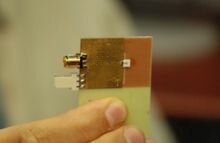
According to physorg.com Taiwanese engineers developed a new wireless technology that makes WIFI and 3.5G cell phones speeds laughable. This new SoC design chip is 100 times faster than WIFI and 350 times faster than 3.5G and could possibly only cost $1 to make per chip in mass quantities.
The head of the project Professor Jri Lee of National Taiwan University (NTU) and UCLA PhD recently demonstrated the chip locally at NTU. According to physorg.com, “The system on a chip combines Front-End Circuits and an antenna array to reach the ultimate transmission speed.” The SoC chip was demonstrated at downloading a 4GB video in about 10 seconds which would take about 4.5 hours using a bluetooth device.
SoC stands for System-on-a-chip and If you are curious to what the SoC chip definition is check out this LINK at Wikipedia to find out.
Click Here to read the rest of the article at physorg.com
Source: physorg.com
Tags:3.5G,download speed,fastest download,SoC wireless chip,wifi,wireless technology
October 3, 2008 at 5:29 pm | Random, Science
- Posted by AR |
Have you seen the IG Nobel Prize winners? Do you even know what I am talking about?
Well, I have just recently heard about the annual IG Nobel Prizes given out each year around October and there are some interesting winners. As you might have figured out from the title of this post Sharee A. Umpierre, Joseph A. Hill, and Deborah J. Anderson did lab research and discovered that Coca Cola can be used as an effective spermicide. They don’t go into detail on how they experimented with this research, but we can only imagine. The research also showed that Diet Coke worked better than regular Coke. That is great, you can get less calories and prevent pregnancy at the same time!

Readers please don’t try this, I am pretty sure it is a parody and supposed to be taken lightly, the main title of improbable.com is “Research that makes people LAUGH and then THINK.” I did laugh but I tried not to think after reading about this one because what is the point.
Here are a couple more notable winners: For Biology Marie-Christine Cadiergues, Christel Joubert,, and Michel Franc of Ecole discovered that fleas living on a dog can jump higher than fleas that live on a cat, For the Economics prize Geoffrey Miller, Joshua Tybur and Brent Jordan found out that a strippers (professional lap dancers) “ovulatory cycle affects her tip earnings.”
There are many others to check out so go Here to see the rest of the big winners!
Source: Improbable.com
 Random
 Technology
 About
About